Nomination process for proposed updates to the IUCN Global Ecosystem Typology (GET)
Download this document (and appendices) as a PDF
Background
The International Union for Conservation of Nature (IUCN) Global Ecosystem Typology (GET) is a global classification system that provides a consistent framework for describing and classifying ecosystems. It distinguishes functionally different groups of ecosystems at its upper levels and compositionally distinct expressions of functional types at lower levels. Its lowest level provides a means of integrating nationally- and locally-based classifications into the global framework.
Since development in 2020, the GET has rapidly gained status as a global policy instrument. It provides the reference classification for assets in ecosystem accounts based on the UN System for Environmental Economic Accounts – Ecosystem Accounts (SEEA-EA); and is used for reporting on targets and goals of the UN Convention on Biological Diversity (e.g. for Headline Indicators of the UN Kunming-Montreal Global Biodiversity Framework).
This wide usage of the GET in connection with international policy agreements requires temporal stability in the structure and interpretation of GET classification units. On the other hand, there is a need to maintain the GET as a ‘living resource’ with updates that are responsive to advances in knowledge.
The GET Scientific Committee, comprising international experts in terrestrial, freshwater and marine ecosystems evaluates the need for specific updates to the GET, seeking external advice as needed. In evaluating proposed updates, the Committee will have regard to the trade-off between temporal consistency and structural stability of the GET and ensuring that the typology reflects current scientific knowledge. It will consider alternative types of adjustments to the GET to accommodate identified advances in knowledge while minimising the impact on users by limiting structural changes. Significant adjustments to the GET will only be endorsed if their benefits are clearly justified and outweigh the ‘costs’ in terms of temporal instability in the typology. The purpose of this proforma is to enable open input from the user community on updates to the GET and to gather the necessary information for scientifically rigorous evaluation of proposed adjustments, their benefits to the wider user community and their costs to structural stability.
Adjustment types
This process is for proposed adjustments to the Global Ecosystem Typology Levels 1 – 3, particularly Ecosystem Functional Groups (EFGs), which comprise Level 3. The process will be adapted to address adjustments to Levels 4 – 5 as their structure develops. Updates at Levels 6 are managed by local authorities and are outside the scope of this process.
Different types of adjustment to EFGs are likely to have different implications for temporal consistency of application of the GET. Four types of adjustment with increasing levels of expected impact on the temporal stability of the GET include:
I) updates to indicative distribution maps;
II) changes to names of GET units;
III) changes to descriptions of GET units; and
IV) structural changes to the classification units.
The type of adjustment should be identified and justified at the proposal stage and will be reviewed by the GET-SC in formulating its recommendation (Figure 1). The Global Ecosystem Atlas (https://globalecosystemsatlas.org), actively under development in a partnership led by the Group on Earth Observations (GEO) with IUCN and other parties, will provide an important source of map updates for the GET (Type I adjustments). Proposed Type IV adjustments require the strongest justification and careful consideration by the GET-SC, in conjunction with evidence of consultation and advice from specialists on the ecosystems for which adjustments are proposed (Figure 1). Adjustments with higher impact on structural stability will precipitate adjustments to multiple components of the Typology. For example, a structural adjustment creating a new Ecosystem Functional Group (EFG) will require new descriptive profiles and indicative distribution maps, as well as adjustments to those of other EFGs related to the new EFG. In evaluating the benefits and costs of proposed adjustments, the GET-SC will also consider the likely burden of updates to the information systems of user organisations.
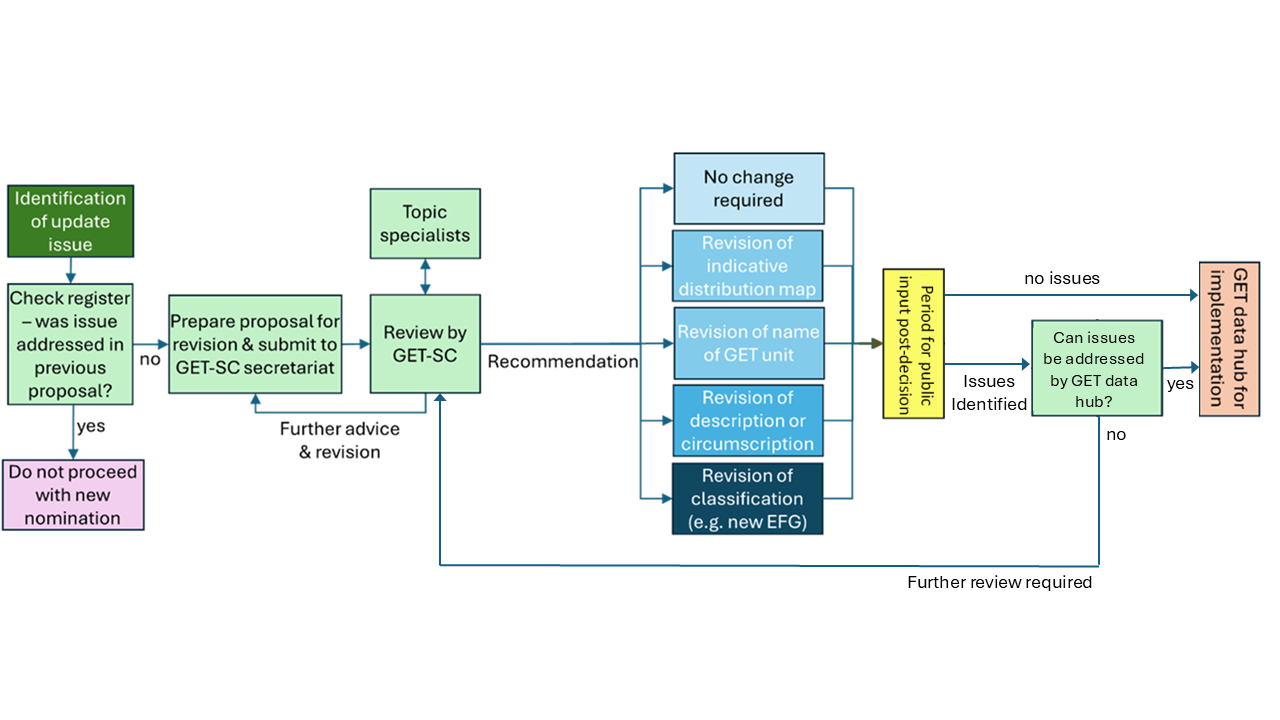
Figure 1: Overview of process for proposing and review of adjustments to the IUCN Global Ecosystem Typology.
Process for proposed adjustments
Issues relevant to updating the GET have historically been flagged from several sources: via feedback from the GET website’s Feedback form, at GET workshops, and via correspondence with GET authors and IUCN staff.
A public interface for proposed adjustments to the GET is available via the current GET website (https://global-ecosystems.org/), with submissions collated by the GET-SC secretariat. The website includes a public register of proposed adjustments and outcomes to limit multiple proposals for the same adjustment. This should be checked by users prior to preparing and lodging proposals.
The public interface and register is temporarily hosted in this website.
Each submission needs to describe in detail the problem with the current GET content and how it is best to be resolved, with justification for the proposed adjustment, noting strong justification is required.
Process for consideration of adjustments
The process for consideration of proposed adjustments by the Global Ecosystem Typology Scientific Committee (GET-SC) will follow the outline provided in Figure 1.
Submissions for proposed updates will be considered by the GET-SC, in two rounds each year. The GET website has details of deadline dates for submissions in each round. Proposals with insufficient justification will not be considered further and nominators will be notified.
The Committee’s review may be informed by consultations with subject matter experts where needed and may involve seeking additional information from the nominator.
Table 1: Process for reviewing and implementing adjustments to the GET by adjustment type
| Type of adjustment proposed | Process for review |
|---|---|
| I) updates to indicative distribution maps (typically proposed as alternative source maps); | Seek input from Global Ecosystem Atlas (GEA) content team on compliance of proposed maps with GEA data standards Seek input from original authors of EFG profile and/or other experts as required GET-SC review of merits and limitations of proposed map relative to existing map data based on:
GET-SC recommendation on map with reasons |
| II) changes to names of GET units; | Seek input from original authors of EFG and/or other experts as required GET-SC review of need, merits (in terms of improved clarity) and limitations (in terms of user experience) of proposed name change GET-SC recommendation on updated name/s |
| III) changes to descriptions of GET units | Seek input from original authors of EFG and/or other experts as required GET-SC determines whether proposed adjustments alter circumscription of unit or only adds detail GET-SC reviews benefits of additional detail relative to the need for concise description GET-SC reviews how altered circumscription might benefit interpretation of the targeted unit and related units, relative to need for structural stability of the GET and implications for cross-referencing to other classifications GET-SC may revise proposed adjustments to description with input from nominator as required GET-SC recommendation on revised description |
| IV) structural changes to classification units (addition or deletion of classes, or significant alterations to circumscription). | GET-SC reviews justification for proposed adjustments to GET structure. Does proposed adjustment:
Text, diagrams and maps drafted for the profile of any new class and necessary adjustments to profiles of existing classes, with input from nominators and/or other experts as required Review GET-SC and other topic experts Recommendation on updated structure and text/maps by GET-SC |
Period for public review of proposed revisions
Following review of proposed adjustments and drafting of any required changes, the proposed adjustments will be made available for public review via the GET website (Figure 1). The period for comments or submissions on proposed adjustments will be 6 months but may be adjusted in the future. Major issues raised during the submission period will be reviewed by the GET data hub, with proposals requiring major changes or consultation referred back to the GET Scientific Committee for further consideration. Proposals that have no issues identified, or minor changes required, will be handled and implemented by the GET Data Hub.
Adjustment implementation and feedback
Accepted adjustments will be implemented by drafting, revising and reviewing maps, text, schematics and EFG structure as required.
Once adjustments have been recommended by the GET-SC, they will send materials to the GET data hub for implementation as updates to the GET website and geospatial archive.
Adjustments will be implemented in successive updates to the GET website and documented in a log for inclusion in future published versions of the GET, and their translations to other languages, ensuring that explicit version control is applied.
Recommendation outcomes will also be sent to the person or organisation who proposed the adjustment.