Rename F3.3 Aquatic and semi-aquatic croplands
The name of this ecosystem functional group in version 2.1 of the Global Ecosystem Typology is Rice paddies. However, the description of the ecosystem functional group accommodates a broader range of crops than just rice, and dry rice croplands fall within T7.1. We thus note the potential alternative name Aquatic and semi-aquatic croplands.
Revision summary: Rename F3.3 Aquatic and semi-aquatic croplands
Origin: Agricultural ecosystems WG (Driver & Botts 2025)
Justification: Accommodate aquatic crops other than rice
Current status: Proposal considered by GET-SC on 8/9/2025 and approved for public consultation on draft update.
See new profile text below with changes highlighted, compare to current text at global-ecosystems.org (opens in new tab)
F3.3 Aquatic and semi-aquatic croplands
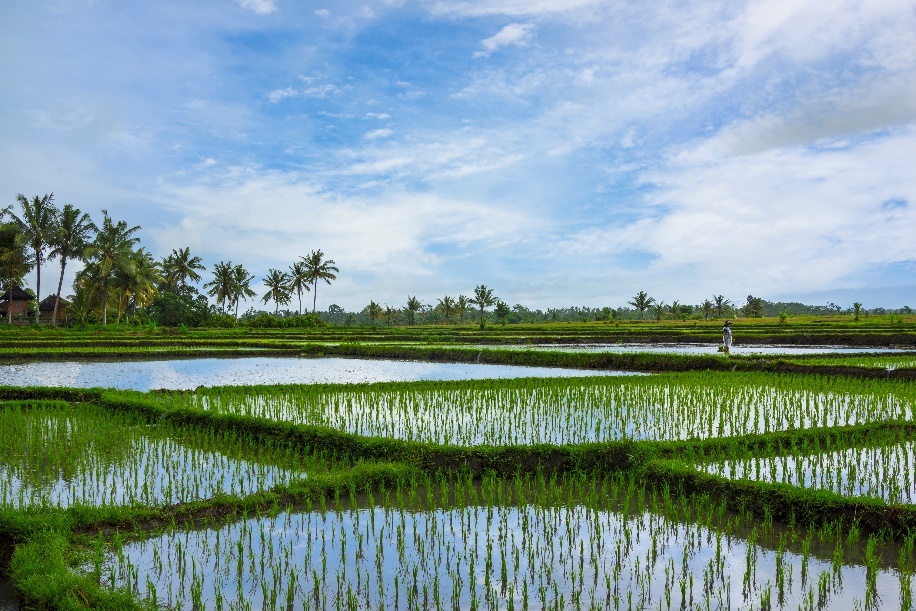
Ecosystem properties: These ecosystems are artificial wetlands with low horizontal and vertical heterogeneity fed by rain or irrigation water diverted from rivers. They are predominantly temporary wetlands, regularly filled and dried, although some are permanently inundated, functioning as simplified marshes. Allochthonous inputs come from water inflow but also include the introduction of aquatic crops such as rice, lotus or tarot, other production organisms (e.g. fish and crustaceans), and fertilisers that promote plant growth. Simplified trophic networks are sustained by seasonal, deterministic flooding and drying regimes and the agricultural management of harvest crops, weeds, and pests. Cultivated macrophytes dominate primary production, but other autotrophs contribute, including archaea, cyanobacteria, phytoplankton, and benthic or epiphytic algae. During flooded periods, microbial changes produce anoxic soil conditions and emissions by methanogenic archaea. Opportunistic colonists include consumers such as zooplankton, insects, fish, frogs, and waterbirds, as well as other aquatic plants. Often they come from nearby natural wetlands or rivers and may breed within these croplands. During dry phases, obligate aquatic organisms are confined to wet refugia beyond the croplands. These species possess traits that promote tolerance to low water quality and predator avoidance. Others organisms, including many invertebrates and plants, have rapid life cycles and dormancy traits allowing persistence as eggs or seeds during dry phases.
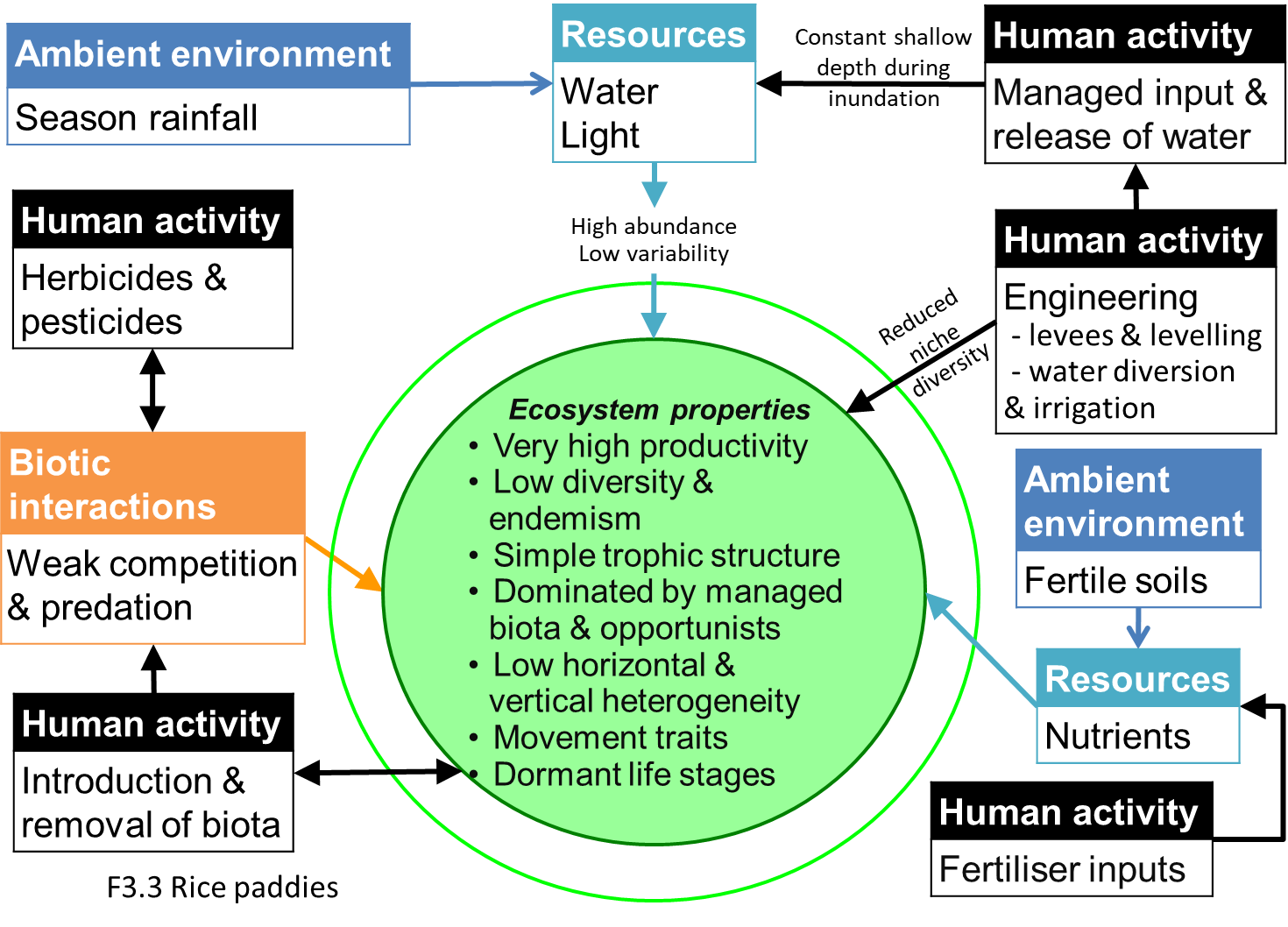
Ecological drivers: Engineering of levees and channels enables the retention of standing water a few centimetres above the soil surface and rapid drying at harvest time. This requires reliable water supply either through summer rains in the seasonal tropics or irrigation in warm-temperate or semi-arid climates. The water has high oxygen content and usually warm temperatures. Deterministic water regimes and shallow depths limit niche diversity and have major influences on the physical, chemical, and biological properties of soils, which contain high nutrient levels. Aquatic croplands are often established on former floodplains but may also be created on terraced hillsides. Other human interventions include cultivation and harvest, aquaculture, and the addition of fertilisers, herbicides, and pesticides.
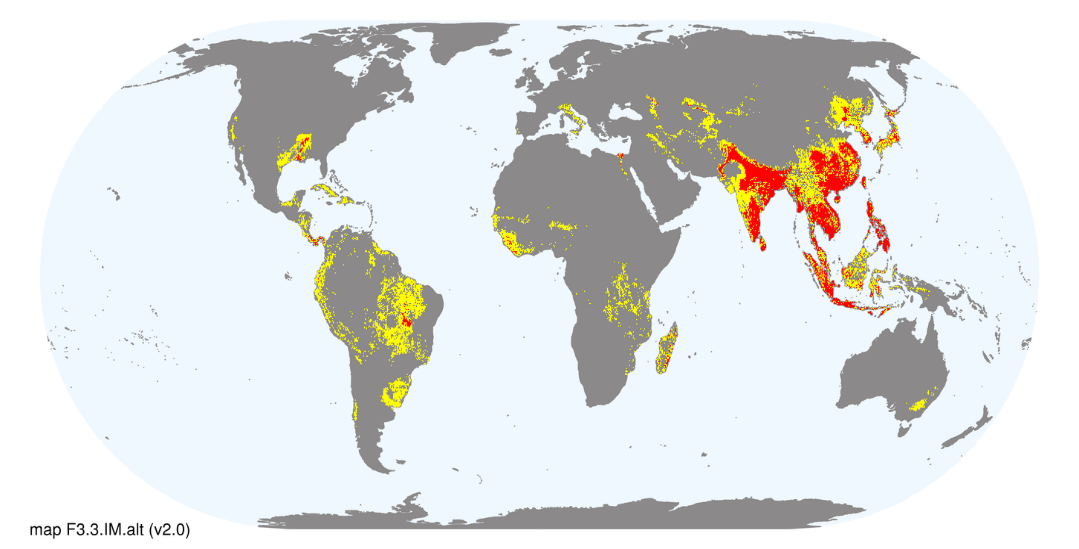
Distribution: More than a million square kilometres, mostly in tropical and subtropical Southeast Asia, with small areas in Africa, Europe, South America, North America, Australia and Pacific.
References:
Fernando CJH (1993) Rice field ecology and fish culture—an overview. Hydrobiologia 259: 91-113.
Liesack W, Schnell S, Revsbech NP (2000) Microbiology of flooded rice paddies. FEMS Microbiology Reviews 24: 625-645